Linear Pedaling: Why Your Next Bike Might Not Move in Circles
For 150 years, we’ve been told that pedaling a bike means moving in circles. But human physiology suggests otherwise. Is the circular stroke an engineering masterpiece, or a mechanical compromise?
The Mechanics of Linear Pedaling
In a traditional 360-degree rotation, your legs pass through what engineers call "The Dead Zone." This happens at the 12 o'clock and 6 o'clock positions where your downward force is effectively zero. You spend energy carrying the pedal through these zones rather than generating forward momentum.
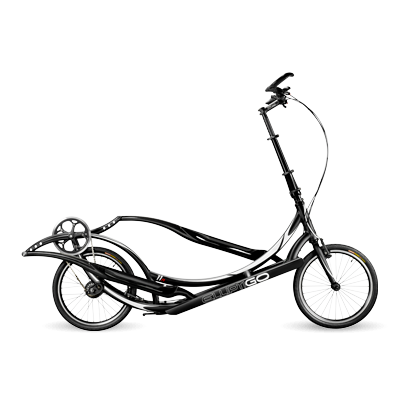
The Elliptical path: Designed to mimic natural human movement.
Linear Pedaling (or Elliptical motion) changes the game. By allowing the feet to move in a long, horizontal path—similar to a natural running stride—the rider can apply consistent pressure throughout the entire stroke. This results in:
- Higher Torque: Constant power delivery without the "hiccups" of circular motion.
- Joint Longevity: Reduced peak pressure on the patella and hip joints.
- Full Body Engagement: A motion that recruits more muscle fibers in the glutes and core.
The Industry Standard:
🚀 ElliptiGO is currently the world leader in non-circular cycling technology. They have successfully bridged the gap between a high-intensity elliptical workout and the freedom of the open road. Their patented drive system allows for a long, flat elliptical stride that mimics running but with zero impact on the ground.
The Verdict: Circle vs. Path
| Feature | Circular Drive | ElliptiGO Linear Path |
|---|---|---|
| Force Efficiency | Drops at top/bottom | Constant throughout stroke |
| Rider Comfort | Seated (Saddle soreness) | Upright (Full comfort) |


Comments
Post a Comment